
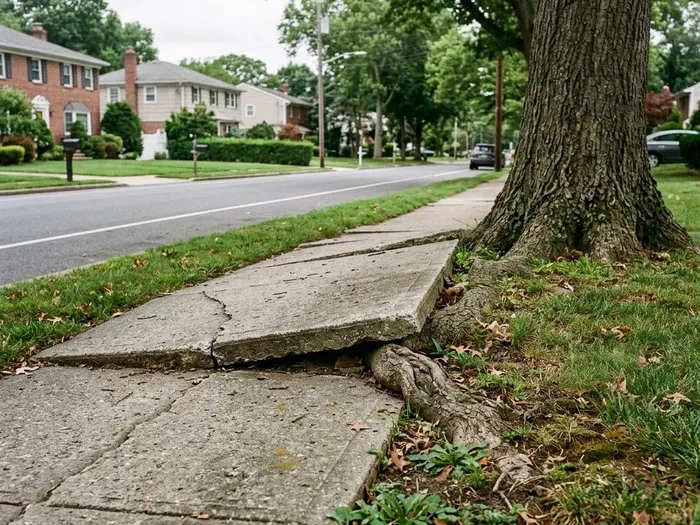
An uneven paving stone, damaged stair, raised floor edge, or poorly placed obstruction can turn an ordinary walk into a serious injury. After a trip and fall, identifying the exact defect is often more useful than describing the property as generally unsafe. The location, dimensions, lighting, and surrounding conditions all help explain the event.
A Long Island trip and fall lawyer can investigate who was responsible for a sidewalk, entrance, stairway, or interior walking surface in Nassau or Suffolk County. These claims can involve private property duties, local sidewalk rules, and special requirements for public entities. The correct approach depends on the particular location, not a single rule for every fall.
Document the specific feature that caused the trip
Take photographs from several distances where safe: the wider walking route, the approach to the hazard, and a closer view of the defect. A close-up without context may not show how visible an obstruction was or where it sat in the normal path of travel. Preserve original files and note the time and lighting conditions.
Dimensions can be relevant, but size alone does not decide every case. Courts may consider the appearance and circumstances of a claimed defect rather than applying a simple measurement that makes every smaller irregularity harmless. Do not assume either that any height difference establishes liability or that a small-looking defect can never support a claim.
Sidewalk responsibility varies by location and law
The owner of adjacent property is not automatically responsible for every public sidewalk defect. Local laws, special use, the creation of a condition, and municipal responsibilities may need examination. Rules applicable in one municipality or in New York City should not be assumed to apply unchanged throughout Nassau and Suffolk.
Give the reviewing attorney the exact address and location, including which side of the street and the nearest entrance or landmark. Ownership and maintenance records may help identify the proper parties. An early assumption about who owns the sidewalk can lead an investigation away from the entity whose conduct or legal duty actually matters.
Stairways and interior routes raise different questions
A stair-related injury may involve a broken tread, inconsistent riser, missing or defective handrail, inadequate lighting, or an obstruction. A retail or apartment-building trip may involve carpeting, cords, thresholds, or merchandise. The investigation should identify which condition contributed and whether any relevant safety provision applies to the building and circumstances.
Building codes and standards are not interchangeable, and not every rule applies to every structure or renovation. Photographs, plans, inspection materials, repair history, and appropriate expert analysis may help establish the condition and applicable requirements. A claim needs a connection between the alleged defect and the fall, not just a list of imperfections in the building.
Distinguish knowledge of a defect from formal legal notice
A premises claim may require proof that a responsible party created the condition or had sufficient notice to address it. A public-property claim can additionally involve a prior-written-notice requirement under the applicable law, with exceptions requiring careful analysis. That issue is different from the injured person’s obligation to serve a notice of claim after an incident.
New York’s notice-of-claim statute sets a 90-day requirement for many covered public-entity claims, but the proper procedure depends on the entity and cause of action. Calling a town office or reporting a fall to an employee may not complete formal service. Prompt review helps separate these different notice questions before an assumption creates a missed opportunity.
Explain the medical and practical effects of the fall
A trip can cause fractures, shoulder injuries, dental trauma, or a head injury. Seek appropriate evaluation and preserve treatment records. Keep evidence of missed work, help needed at home, and out-of-pocket expenses. If symptoms persist or change, discuss them with a medical professional rather than relying on the initial appearance of the injury.
Bring photographs, witness information, the location, and any correspondence to a free case review. Mention repairs or changes made after the event, but do not assume a later repair alone proves legal responsibility. An individualized evaluation can identify useful records, applicable deadlines, and the questions that need to be answered before deciding whether to pursue a claim.
Common questions
- Should I report the defect to the property manager?
- A factual incident report can help document that an injury occurred, but keep a copy or reference number if possible. Reporting does not necessarily satisfy legal notices, and the wording should accurately reflect what you know. Avoid guessing about dimensions, prior complaints, or ownership if those facts are uncertain.
- What if the hazard was repaired before I photographed it?
- Other evidence may still exist, including earlier photographs, witnesses, surveillance recordings, inspection materials, or maintenance records. Identify the location precisely and explain when you learned of the repair. Missing photographs make prompt investigation useful, but they do not automatically determine whether a claim can be established.