
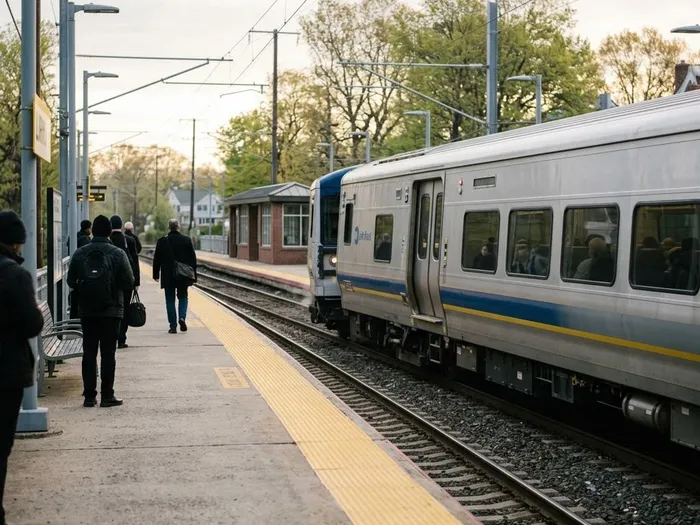
An injury connected with a train can happen during a journey, while boarding, on a station platform, or at a crossing. Those situations are not interchangeable. A passenger hurt by a closing door may face different liability and evidence questions from a railway employee or someone injured in a collision at a crossing.
A Long Island train accident lawyer can identify the operator, property interests, and circumstances relevant to an LIRR or other rail-related injury. Nassau and Suffolk commuters should not assume that reporting an incident to station personnel completes the legal steps needed for a claim. Identifying the correct entity and applicable notice rules is an important early task.
Start with the location and type of rail incident
Write down the station, line, travel direction, departure time, and train or car number if known. For a platform injury, identify the location as precisely as possible, including an entrance, stairway, elevator, or platform section. A general station name may not identify who maintained the particular area or which recordings could show it.
Describe whether the injury involved a gap, a door, a fall, a sudden movement, a collision, or another condition. A sudden stop alone does not automatically establish negligence. The nature of the movement, surrounding circumstances, and available evidence need to be examined rather than assuming that every injury during a train journey creates a valid claim.
Rail records and recordings can be important
Potential evidence may include surveillance footage, train movement information, maintenance records, inspection reports, employee communications, and accounts from other passengers. Not every record is publicly available, and not every system records the same information. A review can identify which materials should be preserved and what formal procedures might be necessary to obtain them.
Keep tickets, electronic receipts, trip history, messages sent around the time of the injury, and photographs in their original form. If an employee prepared a report, note their name or identifying information if possible. A reference number may help locate the report later, but the report itself does not necessarily establish the full facts.
Do not apply a generic deadline to every rail claim
Public transportation claims can involve entity-specific notice and waiting requirements as well as a deadline to sue. The MTA, the Long Island Rail Road, and other related organizations should not simply be treated as the same defendant. The applicable procedure depends on the legal entity and the type of claim being asserted.
New York’s general notice-of-claim statute contains a 90-day rule for many claims where it applies, but that is not a universal answer for every rail matter. A complaint to customer service or an internal incident report may not satisfy legal service requirements. Prompt individual advice is more reliable than assuming a website’s general limitations period covers the case.
Connect the condition to the injury
A claim ordinarily needs evidence showing how the defendant’s conduct or a dangerous condition caused harm. A photograph of a platform gap, spill, or damaged step may be useful, but the surrounding circumstances also matter. Relevant questions can include how long the condition existed, whether the responsible party knew about it, and whether a reasonable response was possible.
Medical records should document the injuries and changes that followed the event. Preserve information about missed work, rehabilitation, assistive devices, and limitations on travel or daily activities. The value of a claim depends on supported losses and legal responsibility, not simply on whether the incident involved a large transit organization.
Passengers and railroad workers may have different rights
An employee injured while working for a railroad may have rights under a different legal framework from a passenger. Employment status, job duties, and the nature of the railroad operation can be significant. Tell the reviewing attorney if the incident happened during work, even if another person described it as an ordinary passenger accident.
For a free case review, gather the incident date, trip details, photographs, report information, and insurance correspondence. You do not need to have access to the railroad’s records before asking for help. The immediate goal is to understand the correct investigation and procedure while evidence and notice opportunities may still be available.
Common questions
- Does a report to the railroad preserve my right to sue?
- Not necessarily. Reporting an injury can be useful evidence, but formal legal notices may have different content, service, and timing requirements. Preserve any acknowledgement you received and ask specifically whether additional steps are needed for the particular operator and claim.
- Can a station fall be a train accident claim?
- A station fall may involve premises-liability questions rather than a collision or train-operation claim. The exact location, responsible property interests, condition, and notice evidence matter. A review can help identify the appropriate theory without assuming that the station’s name alone establishes responsibility.