
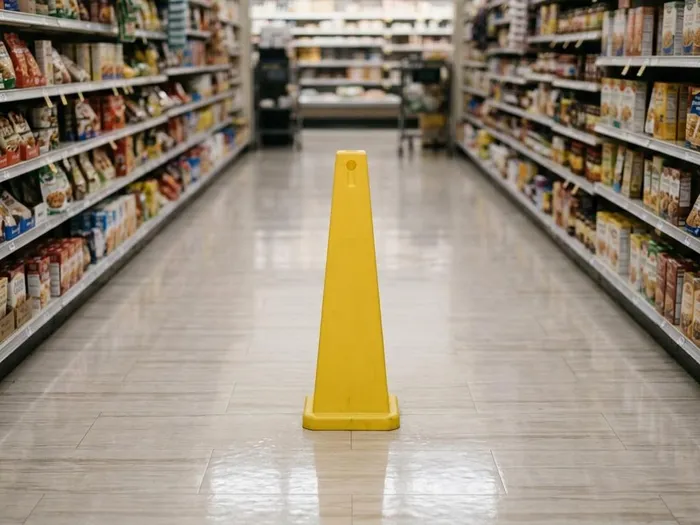
A slippery entrance, leaking refrigerator, wet stairway, or icy walkway can cause an injury that lasts well beyond the moment of the fall. But a property owner is not automatically liable whenever someone slips. A useful evaluation identifies the condition, who was responsible for it, and what the evidence shows about its creation or discovery.
A Long Island slip and fall lawyer can review an incident in a store, apartment building, parking area, or other property in Nassau or Suffolk County. The immediate appearance of a floor may change quickly after cleaning, weather, or repairs, making timely photographs and a precise account especially valuable.
The condition and notice evidence are central
Premises claims often require investigation into whether a defendant created a dangerous condition or had legally sufficient notice of it. Actual notice may involve a report or direct observation. Constructive notice generally concerns whether a condition was visible and apparent and existed long enough to be discovered and addressed through reasonable care.
Those questions require specific facts. A photograph of water after a fall does not necessarily establish how long it was present. Conversely, inspection records, witness accounts, prior complaints, or a recurring problem may help explain what the responsible party knew. The investigation should connect the evidence to the particular condition rather than assume all wet floors are treated alike.
Identify who controlled the relevant area
A building owner, tenant, management company, or maintenance contractor may have different responsibilities. A storefront’s business name does not always identify the property owner, and a property owner may not control every part of a leased space. The location within the premises and the parties’ actual duties can shape the claim.
Preserve the street address, photographs showing the broader setting, and any incident report. If the fall happened in a parking lot or common entrance, describe its relationship to nearby businesses. Ownership records, leases, maintenance agreements, and operational evidence may be needed to determine which parties should be investigated.
Snow and ice cases need a weather-specific investigation
Winter conditions raise questions about precipitation, temperature, snow-removal work, drainage, and when the alleged hazard developed. A storm in progress or an insufficient opportunity to respond can affect the legal analysis. So can evidence that a party created or worsened an icy condition through its actions.
Record the time of the fall and photograph the surrounding area, including cleared paths, piles of snow, drains, and nearby surfaces where safe. Weather records and maintenance logs may provide context that an isolated close-up cannot. Do not assume that a photograph of ice automatically establishes either liability or a complete defense.
Preserve both scene evidence and injury documentation
Seek appropriate medical attention and explain how the fall happened. Hip, wrist, back, and head injuries can require treatment even when someone initially gets up without assistance. Report new or worsening symptoms to a provider. Keep records of appointments, restrictions, prescriptions, and expenses so the injury’s consequences can be evaluated accurately.
If practical, retain the shoes worn during the incident without altering them and keep original photographs or video. Obtain witness contacts and the name of the person who received an incident report. Do not delay treatment to collect evidence, and do not return to an unsafe area simply to create additional photographs.
Consider releases and deadlines before closing the matter
An insurer may request a statement or offer payment before the extent of the injury is understood. Provide accurate information, but ask what a proposed release would end and whether treatment or future needs remain unresolved. A settlement should be considered in light of supported losses, liability evidence, available coverage, and other obligations.
Claims involving municipal property can raise notice-of-claim and prior-written-notice issues distinct from a fall inside a private business. A police or incident report may not satisfy those legal requirements. A free case review can help identify the relevant parties, explain the applicable procedure, and determine which records should be preserved while they are available.
Common questions
- Do I need a photograph taken before the floor was cleaned?
- A timely photograph can be helpful, but its absence does not automatically decide the claim. Witnesses, surveillance recordings, inspection records, and other materials may provide evidence. Explain why no photograph was obtained and identify anyone who saw the condition before it changed.
- Does a warning sign automatically prevent a claim?
- Not necessarily. Its placement, visibility, wording, and relationship to the hazard can matter, along with the circumstances of the fall. A sign is part of the evidence rather than a universal answer. A review should consider whether reasonable care was used under the actual conditions.