
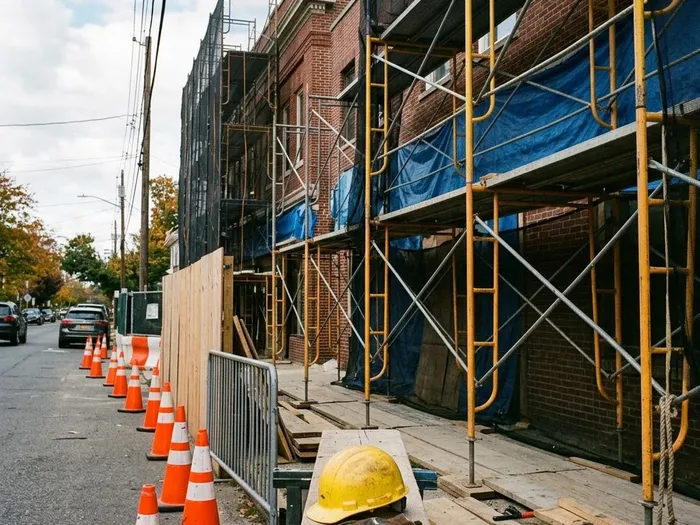
A construction injury can put a worker’s income, mobility, and ability to support a family at risk. Falls, falling materials, machinery incidents, and unsafe access routes can involve different legal duties and insurance systems. Understanding workers’ compensation is important, but it may not be the only issue worth reviewing after a jobsite injury.
A Long Island construction accident lawyer can examine the work being performed, the equipment involved, and the responsibilities of owners, contractors, and other businesses. Nassau and Suffolk projects range from residential renovation to commercial construction, and New York’s Labor Law protections do not apply identically to every activity or property.
Workers’ compensation and third-party claims are different
Workers’ compensation may provide benefits for a qualifying work-related injury without requiring the same fault showing as a negligence lawsuit. A separate civil claim may be possible against an appropriate party outside the employment relationship. The fact that compensation benefits were requested should not automatically end the inquiry into other potentially responsible parties.
Those proceedings can affect each other through reimbursement rights, liens, settlement-consent requirements, or other rules. Tell the reviewing attorney which benefits have been sought and whether anyone already represents you in a compensation matter. Coordinating the legal issues is important; treating each payment or proposed settlement as unrelated can create avoidable problems.
New York Labor Law protections depend on the facts
Labor Law § 240 addresses certain elevation-related risks in specified work and requires appropriate protective devices in covered circumstances. Its application depends on the task, the risk, the parties, and other legal requirements. It does not mean that every fall at work automatically establishes a claim against every owner or contractor.
Labor Law § 241 and § 200 may raise different safety and responsibility questions. Applicable Industrial Code provisions, control over work, and notice of conditions can matter. The statute also contains important distinctions, including a homeowner exemption in certain circumstances. A useful review identifies the actual legal basis rather than treating the phrase Scaffold Law as a complete analysis.
Preserve the equipment and project information
Relevant information can include the project address, employer, general contractor, subcontractors, site supervisor, and the task underway. Photograph ladders, scaffolding, platforms, openings, machinery, or falling materials if safe and practical. Preserve identifying labels, equipment model information, and witness names rather than relying only on a broad description of a construction accident.
Incident reports, safety meeting records, contracts, inspection materials, photographs taken by others, and recordings may help establish responsibility. Equipment can be moved or repaired quickly as a project continues. Prompt preservation requests may therefore be useful before the worksite changes, even while the injured person remains in treatment.
Document the effect on the work you actually perform
A hand injury can affect a tradesperson differently from a person whose work does not require the same tasks. Describe lifting, climbing, overhead work, tool use, and other job duties accurately. Medical restrictions and vocational or economic evidence may help explain why an injury affects earning capacity rather than simply causing a short period away from work.
Potential losses may include treatment expenses, lost earnings, future care, and other available damages. Benefits already received and reimbursement obligations require consideration. Do not rely on a settlement figure from another construction case; different injuries, defendants, coverage, and legal proof can produce very different outcomes.
Report accurately and ask about the complete timetable
Follow appropriate procedures for reporting the injury and seeking medical care. Keep copies of forms, written restrictions, correspondence, and any instructions received from employers or insurers. Avoid signing a description that you know is inaccurate, and explain promptly if an initial report omitted facts because of pain, confusion, or limited information.
Workers’ compensation notices, a third-party lawsuit, and a claim involving public property may follow different deadlines. A free construction accident case review can help identify those separate obligations and the parties who should be investigated. You do not need to understand the project’s contracts or legal structure before asking how the incident should be evaluated.
Common questions
- Does receiving workers’ compensation prevent every lawsuit?
- Not necessarily. A potential claim against a legally responsible third party may be separate from benefits involving an employer. Who can be sued and how the claims interact depend on the work relationships, facts, and governing law. Disclose benefits and existing representation so those issues can be addressed together.
- Is every ladder fall covered by Labor Law § 240?
- No. The activity, elevation-related risk, protective equipment, defendants, and statutory exceptions need analysis. Even when a ladder is involved, the legal result is not automatic. Explain what you were doing, how the equipment was positioned, and why you believe it moved, failed, or did not provide protection.